
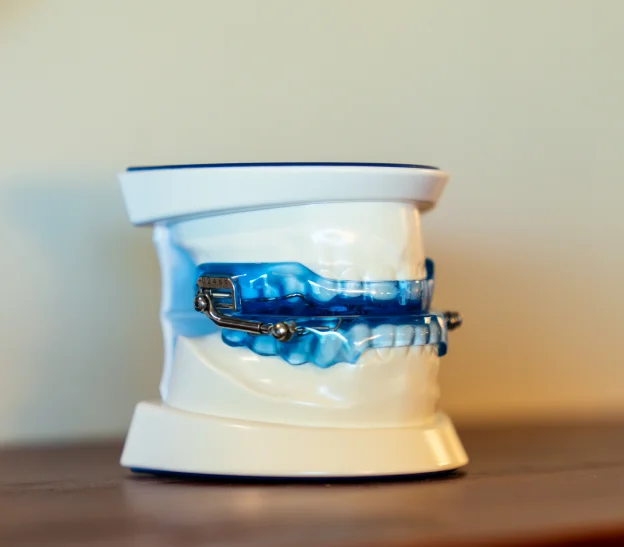
Custom-Fit Oral Appliance Therapy for Sleep Apnea
At Svans Dentistry, custom oral appliances are designed to fit comfortably and help keep the airway open during sleep. These discreet devices gently reposition the lower jaw forward, which can help reduce the tendency of the tongue and soft tissues to block the airway.
Unlike CPAP machines, oral appliances do not require a motor, hoses, or a separate power source. Their compact design can also make them convenient for patients who travel frequently or have difficulty tolerating CPAP therapy. For appropriate patients, consistent use may help reduce sleep apnea symptoms and improve sleep quality.
Signs You Need Sleep Apnea Treatment
Sleep apnea symptoms can be easy to overlook, especially if you sleep alone. Recognizing common warning signs can help you determine when it may be time to speak with a healthcare professional about further evaluation.
- Loud, frequent snoring
- Gasping or choking sensations during sleep
- Persistent fatigue despite adequate hours of sleep
- Trouble concentrating during the day
- Frequent morning headaches
- Difficulty tolerating a CPAP machine
Our Sleep Apnea Treatment Process
Getting started with sleep apnea treatment follows a clear, structured process focused on identifying the right solution for individual needs. It begins with an evaluation of your symptoms and concerns. Here’s how we treat sleep apnea disorder in our patients:
Symptom Review
Sleep patterns, fatigue levels, and any prior diagnosis are discussed to understand the full picture of current symptoms.
Airway and Bite Evaluation
Jaw structure and airway positioning are assessed to determine how effectively an oral appliance could help.
Custom Appliance Fabrication
Precise measurements are taken to design an appliance tailored specifically to individual anatomy and comfort needs.
Fitting and Fine-Tuning
The finished appliance is fitted and adjusted as needed to ensure proper function and a comfortable, secure fit.
Ongoing Progress Monitoring
Regular follow-ups track how well symptoms are improving, with adjustments made to the appliance as necessary.
How Oral Appliances Help Keep Airways Open
A custom oral appliance works by gently repositioning the lower jaw forward during sleep. This can help reduce the collapse or narrowing of the upper airway that contributes to breathing interruptions in obstructive sleep apnea.
Because the appliance is worn at night and designed around your bite, it can allow you to move more freely than treatments that require external equipment. For appropriate patients, oral appliance therapy may help reduce snoring and sleep apnea symptoms when used consistently. The dentist will determine whether an oral appliance is appropriate based on your diagnosis, oral health, jaw structure, and treatment needs.
Prioritize Your Sleep and Overall Health
Persistent fatigue and disrupted sleep shouldn’t be treated as an unavoidable part of life. At Svans Dentistry in Scottsdale, AZ, our team is here to help patients seeking sleep apnea therapy with personalized care designed to identify sleep-related concerns and support more restful, restorative nights.
Request an AppointmentFrequently Asked Questions About Sleep Apnea Treatment
You may have sleep apnea if you snore loudly, stop breathing at night, or wake up tired even after a full night of sleep. Morning headaches and daytime fatigue are also common signs. A sleep study gives a clear and accurate diagnosis.
Left untreated, sleep apnea can contribute to chronic fatigue, difficulty concentrating, high blood pressure, and increased risk of long-term cardiovascular concerns. Addressing symptoms early helps reduce these risks and improve overall well-being.
For many patients with mild to moderate sleep apnea, an oral appliance is a more comfortable, tolerable option than CPAP. Since it’s easier to use consistently, it often leads to more reliable, long-term results.
Yes. Custom oral appliances are designed to fit the mouth and bite precisely, making them significantly more comfortable than bulkier alternatives, allowing for consistent, undisturbed use throughout the night.
Yes. Dentists trained in sleep medicine can design and fit custom oral appliances that reposition the jaw to prevent airway obstruction, offering an effective treatment option for many sleep apnea patients.
Many patients notice improved sleep quality within the first few weeks of consistent oral appliance use, as the airway stays open more effectively and nighttime breathing becomes more regular.
In most cases, yes. A sleep study helps confirm a sleep apnea diagnosis and determine its severity, which guides whether an oral appliance is the most appropriate treatment option.
Yes. Oral appliances can help reduce snoring caused by airway narrowing, even in patients who haven’t been formally diagnosed with sleep apnea, though an evaluation is recommended to rule out underlying concerns.