
Why Choose Root Canal Therapy
Choosing root canal therapy offers several important advantages. Preserving the natural tooth can support surrounding teeth, maintain proper bite alignment, and reduce the need for additional restorative procedures. Timely treatment can also help protect overall oral health while allowing the treated tooth to continue functioning naturally.
- Preserves Your Natural Tooth: Keeping a natural tooth helps maintain oral health and prevents the complications that often follow tooth loss.
- Prevents the Spread of Infection: Removing infected tissue stops bacteria from spreading to surrounding teeth and tissues.
- Relieves Pain: Clearing out infected pulp eliminates the source of discomfort, often bringing significant relief.
- Avoids More Invasive Procedures: Timely treatment prevents infection from progressing, helping avoid the need for extraction, implants, or bridges later.
- Maintains a Stable Bite: Preserving the natural tooth helps prevent shifting and supports long-term bite stability.
- Restores Full Function: Once treated and restored with a crown, the tooth can be used comfortably for eating and speaking again.
Who Needs Root Canal Therapy?
Root canal therapy may be recommended when infection or inflammation reaches the pulp, or the soft tissue inside a tooth. Common signs include persistent or severe tooth pain, particularly when chewing, and sensitivity to hot or cold that continues after the stimulus is removed. Other symptoms can include swelling or tenderness around a specific tooth, darkening or discoloration, a cracked, chipped, or deeply decayed tooth, or a recurring pimple-like bump on the gums. A thorough evaluation, including digital X-rays, helps determine whether the pulp has been affected and whether root canal therapy is the appropriate treatment.
What Happens During Root Canal Therapy
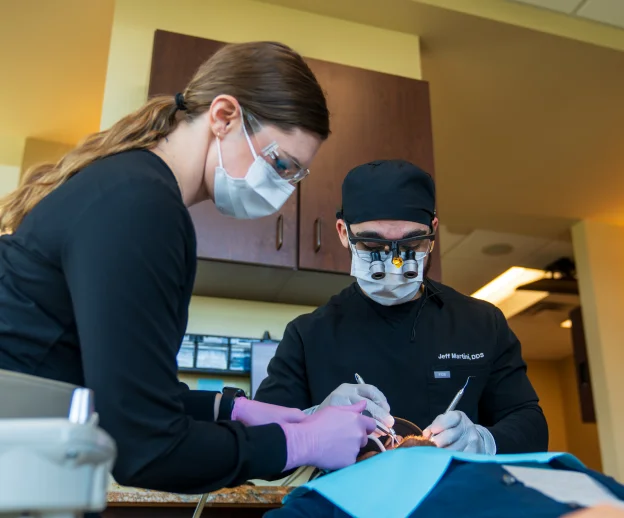
Root Canal Therapy is carefully performed to remove infection, clean the inside of the tooth, and seal it against future bacterial contamination. Each step is designed to preserve as much healthy tooth structure as possible while restoring the tooth’s strength and function.
Diagnosis and Preparation
X-rays are taken to assess the tooth’s condition, and the area is numbed for comfort before treatment begins.
Removal of Infected Tissue
The infected or damaged pulp is carefully removed from inside the tooth’s root canal system.
Cleaning and Shaping
The inside of the tooth is thoroughly cleaned and shaped to prepare it for filling and to eliminate remaining bacteria.
Filling and Sealing
The cleaned canal is filled with a biocompatible material and sealed to prevent future infection.
Restoration With a Crown
In most cases, the treated tooth is capped with a crown, restoring strength, function, and a natural appearance.
Recovering After Your Root Canal
After a root canal, giving the treated tooth time to settle can support a smoother recovery. Wait until the numbness from anesthesia has completely worn off before eating to avoid accidentally biting your cheek, tongue, or lip. Once normal sensation returns, choose softer foods that are easy to chew and place minimal pressure on the treated tooth. Avoid hard, crunchy, or sticky foods for the first few days, especially if a temporary restoration has been placed. Mild soreness or sensitivity can occur after treatment and typically improves as the surrounding tissues recover.
Treat Infection and Preserve Your Tooth
Tooth pain and infection rarely improve without treatment, and waiting can lead to more complex procedures down the road. Root canal therapy offers an effective way to relieve discomfort and keep a natural tooth intact. At Svans Dentistry in Scottsdale, AZ, our team is here to listen to your concerns, explain your treatment options, and help you feel comfortable throughout your care. Call us at 480-219-8760 to schedule an appointment and take the next step toward a healthier, more comfortable smile.
Request an AppointmentFrequently Asked Questions About Root Canal Therapy
You may need a root canal if you experience persistent tooth pain, sensitivity to hot or cold, swelling, tenderness, or a damaged or infected tooth. A dental examination and X-rays can determine whether root canal treatment is necessary.
Modern root canal treatment is performed with local anesthesia to keep you comfortable. You may experience mild soreness or sensitivity afterward, but this typically improves within a few days with appropriate care and medication.
A root canal typically takes about 60 to 90 minutes, although the exact time depends on the tooth and complexity of the infection. Some cases may require more than one appointment to complete treatment.
Most patients can return to their normal daily activities after a root canal. You may experience some tenderness once the anesthesia wears off, so it is best to avoid chewing on the treated tooth until your final restoration is placed.
Without treatment, an infected tooth can worsen and cause increasing pain, swelling, or an abscess. The infection may eventually spread to surrounding tissues, potentially making the tooth harder to save and requiring extraction instead.
A properly treated and restored tooth can last many years, and sometimes a lifetime, with good oral hygiene and regular dental care. Avoiding excessive pressure or damage and maintaining routine checkups can help protect the treated tooth.
For many patients, yes. Root canal therapy preserves the natural tooth, helps maintain bite stability, and can prevent the need for more invasive and costly procedures like implants later on.
With proper restoration and care, a tooth treated with root canal therapy can last many years, often a lifetime, especially when protected with a crown and maintained through regular checkups.