

Types of Dental Bridges
Dental bridges come in several types, each designed to replace missing teeth in different situations. The best option depends on factors such as the location of the gap, the number of teeth being replaced, and the condition of the surrounding teeth. Common types include:
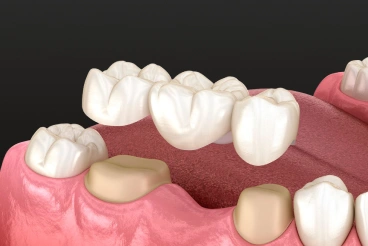
Traditional Bridges
The most common type, anchored by crowns placed on the natural teeth surrounding the gap.
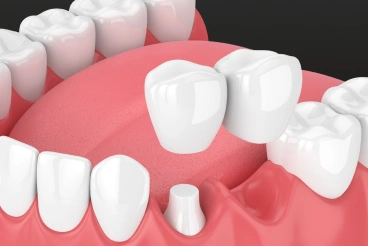
Cantilever Bridges
Supported by a crown on only one side, used when a natural tooth is present on just one end of the gap.
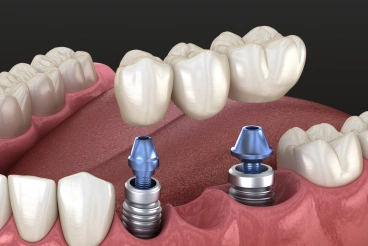
Implant-Supported Bridges
Anchored to dental implants rather than natural teeth, offering added stability when multiple adjacent teeth need to be replaced or when surrounding teeth are not suitable for support.
Benefits of a Dental Bridge
A dental bridge can provide several practical benefits for people with missing teeth. It fills the visible gap in your smile while helping restore chewing function and support clearer speech. Replacing a missing tooth can also help prevent neighboring teeth from shifting into the open space, which may affect your bite.
Because a bridge is fixed in place, it stays securely positioned during everyday activities without the need for daily removal. With the right design and care, a dental bridge can also help maintain a more complete appearance while supporting the overall function of your smile.
What to Expect When Getting a Dental Bridge
Getting a dental bridge typically involves a few visits to evaluate your oral health, prepare the supporting teeth, and place the final restoration. The dentist will evaluate the gap, surrounding teeth, gums, and bite before recommending the most appropriate type of bridge for your needs.
Comprehensive Evaluation
The gap, surrounding teeth, and gum health are assessed to confirm candidacy and plan the bridge design.
Preparing the Abutment Teeth
The teeth on either side of the gap are gently reshaped to support the bridge and provide a secure foundation.
Digital Impressions
Precise measurements of the prepared teeth and surrounding gum tissue are captured to design a bridge that fits accurately.
Temporary Bridge Placement
A temporary restoration protects the prepared teeth while the custom bridge is being fabricated.
Final Fitting and Placement
Once ready, the permanent bridge is checked for fit, bite alignment, and appearance, then securely bonded into place.
How to Care for Your Dental Bridges
Proper care can help keep your dental bridge clean, secure, and functional for many years. Brush twice daily with fluoride toothpaste and clean carefully around the supporting teeth and underneath the bridge to remove plaque and food particles. Flossing or using an interdental cleaner can help reach areas that a toothbrush cannot.
Avoid chewing very hard foods or objects that could place excessive pressure on the restoration. Maintaining regular dental checkups and professional cleanings also allows the dentist to monitor the condition of the bridge, supporting teeth, and surrounding gums. With consistent oral hygiene and routine professional care, you can help protect your restoration and the teeth that support it.
Restore Function and Confidence in Your Smile
A missing tooth can affect everyday comfort, chewing, and confidence. Svans Dentistry in Scottsdale, AZ, provides custom dental bridges designed to replace missing teeth and restore comfortable, natural-looking function. Call us at Scottsdale, AZ to schedule an appointment.
Request an AppointmentFrequently Asked Questions About Dental Bridges
A dental bridge is a fixed restoration that replaces one or more missing teeth by anchoring to the natural teeth or implants on either side of the gap, restoring both appearance and function.
With proper care, a dental bridge typically lasts ten to fifteen years or longer, depending on oral hygiene habits and how well the surrounding teeth are maintained over time.
The teeth on either side of the gap are numbed with local anesthesia before being reshaped, so the procedure itself is generally comfortable. Some mild sensitivity afterward is normal.
Most dental bridges require two visits, one to prepare the surrounding teeth and take impressions, and a second to fit and permanently bond the finished bridge.
Yes. An implant-supported bridge anchors to dental implants rather than natural teeth, offering added stability, especially useful for larger gaps or when nearby teeth aren’t strong enough for support.
A dental bridge is cared for with regular brushing and flossing, including special attention to cleaning underneath the bridge to prevent decay and gum irritation around the supporting teeth.
A dental bridge is fixed in place and not removable, while a partial denture can be taken out for cleaning. Bridges generally offer a more stable, natural feel during daily use.
Good candidates typically have healthy, stable teeth on either side of the gap to support the bridge. An evaluation helps determine whether a bridge or another restoration option is the better fit.