
Run your tongue along your teeth right now. Notice any fuzzy film? Or maybe a rough, crusty patch near the gumline that wasn’t there last month? That’s plaque, and possibly its tougher cousin, tartar. Most of us ignore both until a dental visit brings them up.
Here’s the thing, though. Plaque and tartar aren’t just cosmetic. They quietly fuel cavities, bad breath, and gum disease. And while you can handle plaque at home, tartar is a whole different story. Once it’s there, only a pro can get rid of it. That’s where a Scottsdale Dentist steps in.
Let’s break down how one turns into the other, and what actually gets done about it.
What Is Plaque, Exactly?
Plaque is a soft, sticky film made of bacteria, saliva, and leftover food particles. It starts forming within hours after you eat or drink. You can’t really see it when it’s fresh, but you might feel it as that slightly fuzzy coating on your teeth when you wake up.
The bacteria in plaque feed on sugars and starches in your food. As they feast, they produce acids. Those acids attack your enamel, which is how cavities begin. They also irritate your gums, leading to redness, swelling, and bleeding.
The good news? Plaque is easy to remove. Brushing and flossing wipe it away, provided you do it well and often enough. Miss it, though, and trouble starts.
So How Does Plaque Become Tartar?
Here’s where it gets interesting. Your saliva carries minerals like calcium and phosphate. When plaque sits on your teeth too long, those minerals soak into it and harden it. The result is tartar, also called calculus. It’s a rock-hard, crusty deposit that clings to your teeth.
How fast does this happen? Plaque can begin hardening in as little as one to three days if it isn’t cleaned off. Some people build it faster than others. Your saliva’s makeup, your diet, and even genetics play a role. That’s why two people with the same brushing habits can end up with very different amounts of tartar.
And tartar loves certain spots. Behind your lower front teeth, near the salivary glands, is a classic hangout. So are the back surfaces of your upper molars and the spaces along your gumline. Basically, anywhere your brush doesn’t reach well.
Why Tartar Is a Bigger Deal Than You Think
Tartar isn’t smooth. Its rough, porous surface gives fresh plaque a perfect place to cling and grow. So once tartar forms, it basically helps itself multiply. That creates a cycle that’s hard to break at home.
Here’s what it can lead to:
- Gum disease, starting with gingivitis and potentially progressing to periodontitis
- Persistent bad breath that mouthwash can’t cover up
- Receding gums and exposed roots
- Tooth decay, especially near the gumline
- Yellow or brown stains on your teeth
Tartar that creeps below the gumline is especially troublesome. It irritates the tissue, causes gums to pull away from the teeth, and forms pockets where bacteria thrive. Over time, that can damage the bone supporting your teeth. Not exactly what you want, and a good reason to see a Scottsdale Dentist early.
Can You Remove Tartar at Home?
Short answer: no. Brushing won’t budge it. Neither will whitening toothpaste, baking soda, or any of those DIY hacks floating around online. Scraping at it yourself with sharp tools is a bad idea too. You can scratch your enamel or hurt your gums.
What you can do at home is stop new tartar from forming. Good brushing and flossing remove plaque before it hardens. But once tartar’s there, you need professional help. A Scottsdale Dentist has the tools and training to take it off safely.
How Dentists Treat Tartar
So what happens at the dental office? It’s pretty straightforward, and honestly, a lot less scary than people expect.
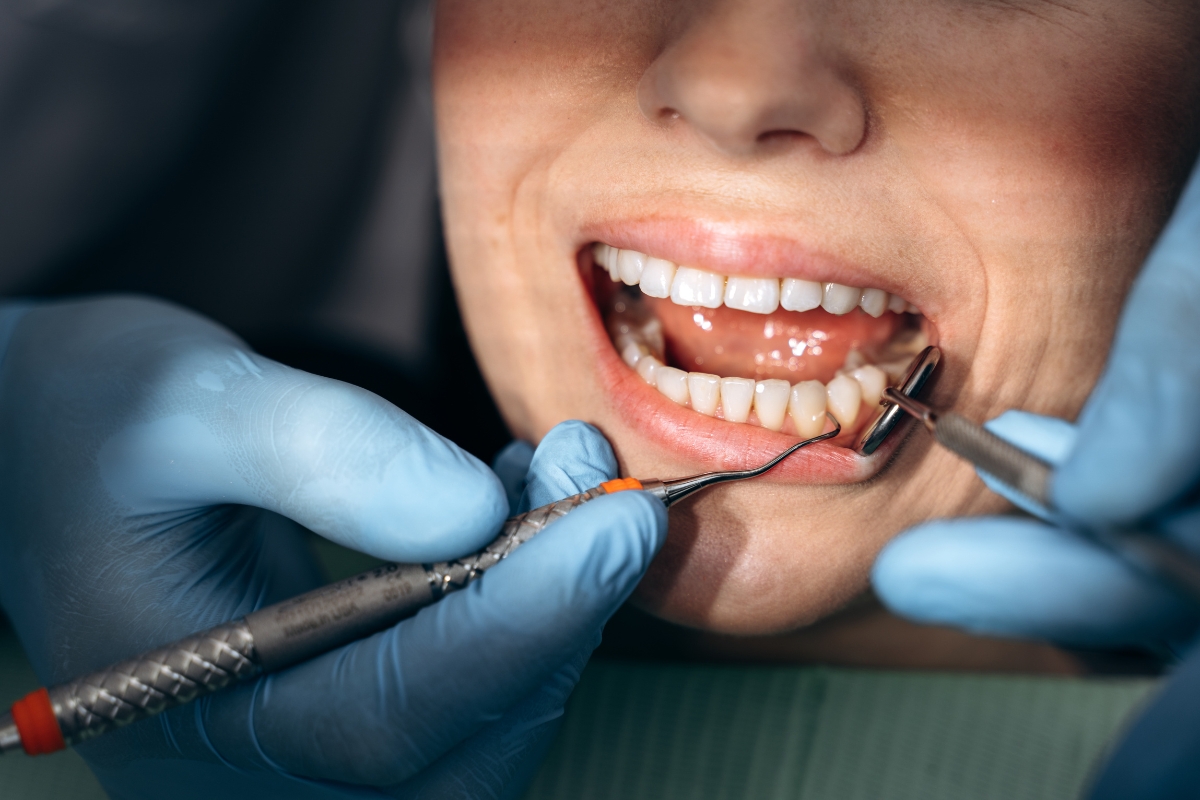
Scaling: This is the main event. Your dentist or hygienist uses special instruments to scrape tartar from your teeth, both above and just below the gumline. Many offices use an ultrasonic scaler, a small tool that vibrates to break up buildup while rinsing it away with water. Then, hand tools finish the job and smooth things out. You might hear some scraping or buzzing. It can feel a bit strange, but it usually isn’t painful.
Polishing: After scaling, your teeth get polished with a gritty paste. This smooths the surface and removes lingering stains. Smoother teeth are harder for new plaque to stick to. That’s a nice bonus.
Fluoride treatment: Some visits end with a fluoride application to help strengthen enamel. Your Scottsdale Dentist will let you know if that’s a good idea for you.
Deep cleaning: If tartar has built up below the gumline and gum disease has set in, a regular cleaning may not be enough. In that case, you might need scaling and root planing, often called a deep cleaning. It cleans below the gumline and smooths the tooth roots so gums can reattach more easily. Sometimes it’s done in sections, with numbing so you stay comfortable.
How Often Should You Get a Cleaning?
For most people, twice a year works well. But it isn’t one-size-fits-all. If you build up tartar quickly, have gum disease, smoke, or have conditions like diabetes, your dentist may suggest visits every three or four months. A trusted Scottsdale Dentist can tailor a schedule to your mouth, not just a general rule.
Keeping Tartar Away Between Visits
Prevention beats treatment every time. A few habits go a long way:
- Brush twice a day for two minutes, with fluoride toothpaste
- Floss daily, because brushing alone misses the spaces between teeth
- Pay extra attention to the gumline and back teeth
- Cut back on sugary snacks and drinks
- Don’t smoke, since it speeds up tartar buildup
- Keep up with regular dental visits
Some people find electric toothbrushes help them clean more thoroughly. Others like water flossers or interdental brushes. Ask a Scottsdale Dentist which tools suit you best.
FAQs: Frequently Asked Questions
Q: Is plaque the same as tartar?
A: No. Plaque is a soft, sticky film you can remove with brushing and flossing. Tartar is hardened plaque that needs professional removal.
Q: Does getting tartar removed hurt?
A: Usually not. You might feel some pressure, scraping, or sensitivity, especially if your gums are inflamed. Tell your hygienist or Scottsdale Dentist if anything bothers you, and they can adjust.
Q: Can tartar cause gum disease?
A: It can contribute. Tartar gives bacteria a rough surface to cling to, which irritates gums and can lead to gum disease if left alone.
Q: How long does tartar take to form?
A: Plaque can begin to harden in as little as a day or two, though it varies from person to person.
Q: Will my teeth feel different after a cleaning?
A: Yes, in a good way. They’ll feel smoother and cleaner. Some people notice temporary sensitivity, which usually fades quickly. A Scottsdale Dentist can suggest ways to ease it.
Ready for a Cleaner, Healthier Smile?
If you’ve felt rough spots on your teeth, noticed bleeding gums, or can’t remember your last cleaning, now’s a great time to book. Tartar won’t go away by itself, and it only gets harder to deal with the longer it sits.
Svans Dentistry PLLC offers gentle, thorough cleanings to keep your teeth and gums in great shape. As a trusted Scottsdale Dentist, we’ll remove buildup, check for early signs of trouble, and show you how to keep it from coming back. Schedule your appointment or visit us at our clinic at 7400 E Pinnacle Peak Rd Ste 200, Scottsdale, AZ 85255, to maintain better oral health.