
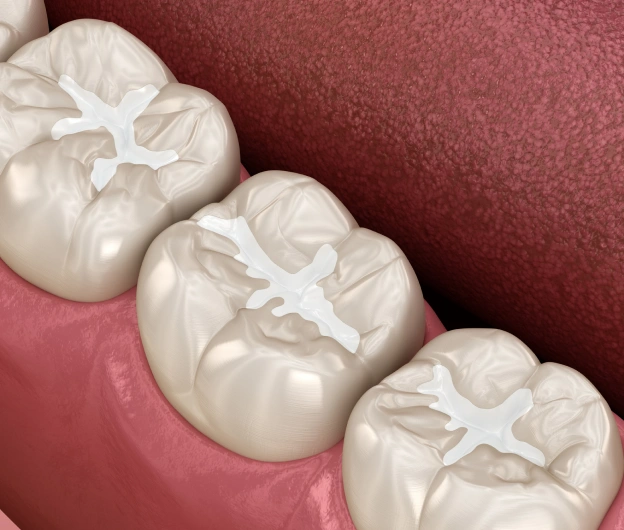
Where Dental Sealants Can Be Helpful
Not every tooth needs a sealant, but they can be especially beneficial for teeth with deep grooves, pits, or other hard-to-clean areas. By adding a protective layer to these vulnerable surfaces, sealants can make it easier to prevent plaque buildup and reduce the risk of cavities.
They’re most useful on teeth with natural grooves and pits where plaque and food particles tend to collect:
- Back Molars: Their uneven chewing surfaces can be difficult to clean thoroughly.
- New Permanent Teeth: Recently erupted molars may benefit from early protection.
- Deep Grooves: Sealants can smooth areas where toothbrush bristles have difficulty reaching.
- Cavity-Prone Teeth: Additional protection may be helpful for patients who frequently develop decay.
- Hard-to-Reach Areas: Sealants can reinforce daily brushing and flossing rather than replace it.
A Preventive Option for Growing Smiles
Children and teenagers can be particularly good candidates for dental sealants because their permanent molars are still relatively new and may have pronounced grooves. Protecting these surfaces early can help reduce opportunities for decay while good brushing and flossing habits continue to develop.
Sealants aren’t limited to younger patients, though. Adults may also benefit when their molars have deep pits, particularly if those teeth have remained free of decay and fillings.
How Sealants Are Applied
Dental sealant treatment is a simple, comfortable way to add an extra layer of protection to vulnerable teeth. The process is quick, non-invasive, and typically completed during a single dental visit, making it an easy addition to your preventive care routine.
Placing a dental sealant is a straightforward, non-invasive process that’s typically completed in a single visit.
Cleaning the Tooth Surface
Each tooth is thoroughly cleaned and dried to prepare the surface for the sealant material.
Applying a Conditioning Solution
A mild solution is applied briefly to help the sealant bond securely to the tooth’s grooves.
Placing the Sealant Material
The liquid sealant is carefully painted onto the chewing surface, flowing into the tiny pits and fissures.
Curing the Sealant
A special light hardens the sealant, forming a durable, protective coating in seconds.
Checking Your Bite
We confirm the sealant feels comfortable and doesn’t interfere with your normal bite before you leave.
Long-Lasting Protection for Your Teeth
Dental sealants are designed to hold up well under daily wear, but like any dental material, they aren’t permanent. With consistent oral hygiene and regular checkups, sealants can last several years, though normal chewing and grinding can gradually wear them down over time. During routine exams, we check the condition of existing sealants and can reapply them if they’ve worn away or chipped.
This ongoing monitoring is one more reason regular cleanings and exams matter, they give us the chance to keep your preventive protection intact rather than letting it quietly wear out unnoticed.
Give Your Molars Extra Protection
Cavities often start in places brushing alone can’t fully reach. Dental sealants offer a simple, effective way to close that gap and provide added protection for your smile. Schedule a visit at Svans Dentistry to find out if sealants are right for you or your child.
Request an AppointmentFrequently Asked Questions About Dental Sealants
Dental sealants are made from a thin, tooth-colored resin material that bonds directly to the chewing surface of a tooth, filling in grooves and pits where decay commonly starts.
No. While sealants are most commonly applied to children’s newly erupted molars, adults without decay or fillings in their molars can also benefit from added protection.
No. Applying a sealant is painless and doesn’t require any drilling, numbing, or removal of tooth structure, making it a quick and comfortable procedure.
Sealants typically last several years with proper care, though they can wear down over time. Regular checkups allow us to monitor their condition and reapply them if needed.
No. Sealants provide additional protection but don’t replace the need for consistent brushing, flossing, and regular dental visits to maintain overall oral health.
Sealants are most often applied to molars and premolars, the back teeth with deep grooves that are most prone to trapping food and bacteria.
Many PPO insurance plans cover sealants, particularly for children and teens. Our team can help verify your benefits ahead of your visit.
While sealants significantly reduce the risk, they don’t eliminate it entirely. Consistent oral hygiene and regular checkups remain important even after sealants are placed.